Home Protection Basics

Simple home security, safety, and insurance guides for normal homeowners.

What Causes Smoke Detectors to Chirp or Beep

A smoke detector that chirps or beeps without a visible fire usually is not acting randomly. In most cases, the unit is signaling a specific condition that needs attention. That condition may be as simple as a low battery, or it may mean the detector is too old, too dirty, improperly installed, or dealing with a power problem.

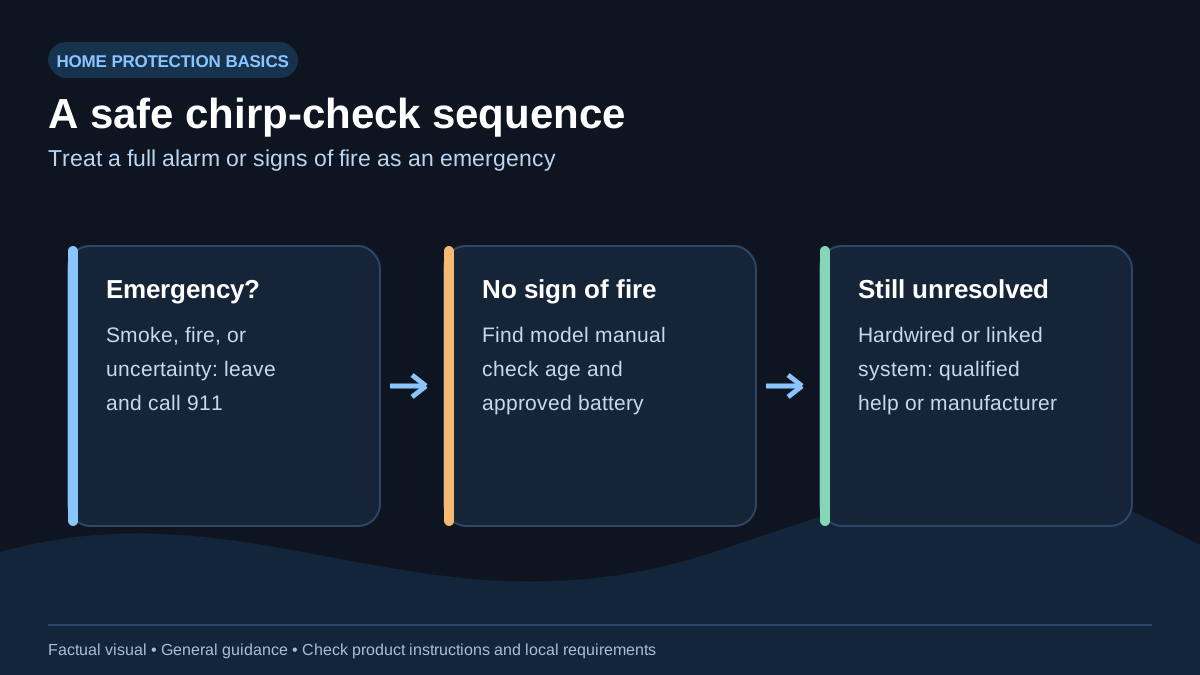
The important thing is not to guess. Replacing batteries over and over, pulling the detector down, or disabling it entirely wastes time and can leave the home less protected. The best approach is to match the chirp pattern, timing, and location to the most likely cause.

Exact beep patterns vary somewhat by manufacturer, so the owner's manual is always worth checking. Still, the causes below account for the vast majority of chirping smoke detectors in homes.

1. Low Battery

The most common reason for chirping is a low or weakening battery. Many smoke detectors emit a single chirp every 30 to 60 seconds once battery voltage falls below the level needed for reliable operation. The chirp is repetitive on purpose because it is meant to push the homeowner to do something instead of ignoring it.

Example: A smoke detector starts chirping in the middle of the night even though it seemed fine the day before. That often happens because cooler overnight temperatures reduce the output of an already weak battery enough to trigger the warning.

2. The Detector Has Reached End of Life

Smoke detectors do not last forever. The sensing components degrade over time, and most residential units are intended to be replaced after about 8 to 10 years. Once that happens, the detector may chirp to signal that the entire unit should be replaced rather than serviced.

Example: A homeowner changes the battery twice and the chirping still comes back. The real issue is not the battery at all. The detector is simply too old and has reached the end of its useful life.

3. Sealed 10-Year Battery Alarm Is Expiring

Some smoke detectors use sealed lithium batteries that are designed to last for the life of the unit. These models are often marketed as 10-year alarms. When one of these starts chirping, the solution is usually not to open the unit and replace the battery. In most cases, the entire detector must be replaced.

Example: A homeowner keeps looking for a battery door that does not exist. That is a sign the detector is a sealed-battery model and is meant to be replaced as a whole unit when it starts warning.

4. Hardwired Unit Has a Power or Connection Problem

Hardwired smoke detectors run on household electrical power and usually include a battery backup. If household power is interrupted, the breaker trips, or the wiring harness connection becomes loose, the detector may chirp even if the backup battery is new.

Example: A hardwired detector begins chirping several months after installation. The problem turns out not to be the battery at all. The harness connector was never fully seated and has a loose connection.

5. Dust, Debris, or Insects Inside the Unit

Smoke detectors are sensitive devices, and the sensing chamber can be affected by fine dust, drywall powder, pet hair, cobwebs, or even small insects. When contamination builds up inside the unit, the detector may chirp intermittently or produce short nuisance alerts.

Example: After a remodeling project, a smoke detector starts chirping off and on for no clear reason. Drywall dust has likely worked its way into the sensing chamber.

6. Humidity or Steam Is Interfering With the Sensor

Smoke detectors installed too close to bathrooms, kitchens, or other moisture sources can react to steam and high humidity. This sometimes causes full nuisance alarms, but it can also show up as intermittent chirping in some units.

Example: A hallway detector chirps most mornings just after someone takes a hot shower. Relocating it farther from the bathroom door solves the problem.

7. Temperature Extremes or Poor Placement

Smoke detectors are meant for normal indoor environments. If they are installed in places that get too hot, too cold, or experience frequent swings in temperature, they can become unreliable and begin chirping or nuisance alarming. Garages, unfinished attics, and spots near HVAC vents are common problem areas.

Example: A detector installed in an attached garage chirps repeatedly during winter cold snaps. The issue is not a bad battery. It is the wrong type of detector in the wrong environment.

8. Interconnected Detectors Are Relaying a Fault

In an interconnected alarm system, one detector can cause others to sound or chirp if it is the source of the warning. That means the unit you hear chirping may not be the actual problem detector.

Example: A bedroom detector chirps even though its battery was just replaced. The actual problem turns out to be a basement detector with a low battery, and the warning is being relayed through the interconnected system.

9. The Detector Was Not Fully Reset After Battery Replacement

Sometimes a smoke detector keeps chirping even after a new battery is installed because the unit still holds a residual charge or has not fully reset. This is especially common when the old battery was removed and the new one installed quickly without clearing the detector.

Example: A homeowner replaces the battery but the detector continues chirping. After removing the battery again and holding the test button long enough to clear the residual charge, the chirping stops.

Bottom Line: Match the Signal to the Cause

Smoke detectors chirp for a reason. Most of the time, the cause falls into one of a few predictable categories:

The wrong response is to disable the detector and hope the chirping goes away. The correct response is to identify the cause and fix it. In most cases, that takes only a few minutes and restores the protection the alarm is there to provide.


Related: Reducing False Smoke Alarms  |  Interconnected Alarm Benefits  |  Photoelectric vs Ionization Alarms