Smoke Alarm Placement Guide: Where to Put Them
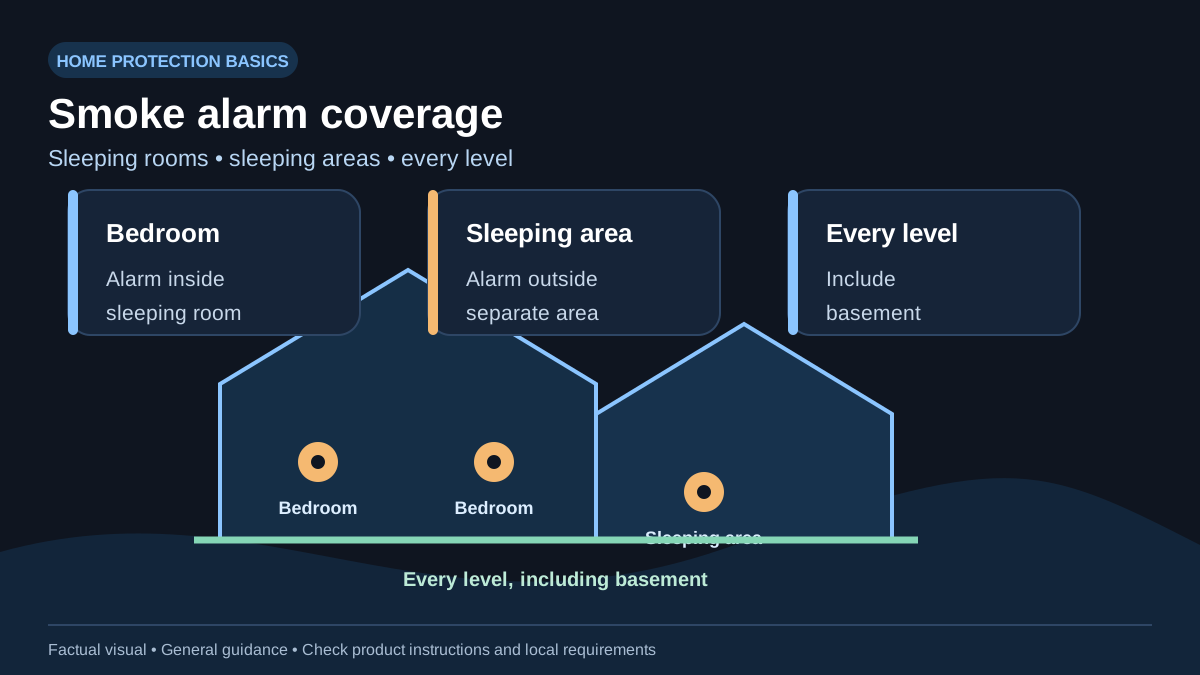
Location is often more important than a feature list. The U.S. Fire Administration (USFA) recommends working smoke alarms inside every bedroom, outside each separate sleeping area, and on every level of the home, including the basement. That is reliable general guidance—not a universal permit plan. New construction, renovations, rentals, and local amendments can require more or different equipment.
Start with the sleeping areas and every level
- Put an alarm inside each sleeping room and outside each separate sleeping area.
- Put at least one on every level, including the basement.
- Prefer interconnected alarms when practical: when one sounds, all sound.
- Make sure everyone who sleeps in the home can hear or otherwise receive the alarm; accessible notification options may be needed.
For a split-bedroom layout, each sleeping wing needs its own outside-the-bedroom coverage. A single hall alarm at the far end of a large home is not a substitute for the bedroom and sleeping-area locations above.
Mounting details are manufacturer-specific
USFA says to place alarms on the ceiling or high on a wall and to follow the manufacturer’s instructions for the best location. Do not use a generic “30-foot spacing” rule from the internet as a design or code rule. Ceiling shape, stairways, HVAC airflow, fuel-burning equipment, and the adopted code can change the required layout.
- Keep the alarm out of corners and other stagnant-air spaces described in its instructions.
- Do not place it where supply vents, fans, steam, or cooking aerosols routinely defeat it.
- If an alarm is near a kitchen or bath, use the model and placement the manufacturer and local authority specify; do not solve nuisance alarms by removing the battery.
Basements, garages, and hardwired work
An alarm on the basement level is part of the general USFA guidance. Garages, very high ceilings, and mechanical areas need extra care because normal heat, humidity, exhaust, or airflow can create nuisance alarms or affect placement. A heat alarm may be appropriate in a garage only when its manufacturer and local authority support that use; it does not replace required smoke alarms elsewhere.
Hardwired installation, circuit changes, and interconnection work are electrical work. USFA advises that qualified electricians install hardwired alarms. Do not modify house wiring or assume a wireless replacement is code-equivalent without checking the product instructions and local requirements.
Test the system and act on an alarm
Test each alarm using its test button at least monthly, follow its battery and cleaning instructions, and replace the entire alarm at the manufacturer’s replacement date (USFA generally says 10 years from manufacture). If an alarm sounds for smoke or fire, leave the building, stay out, and call 911 from outside. Never disable an alarm to stop a cooking or steam nuisance; use the listed hush procedure and fix the placement problem.
Sources and review notes
This page was reviewed against the primary public-safety sources below on September 19, 2026. They provide general safety guidance; the alarm label, local fire authority, building code, lease, and licensed professional remain controlling where they differ.