Hardwired vs Battery Smoke Detectors Explained
Smoke detectors run on one of two power sources: household electrical current or batteries. The difference matters more than most homeowners realize. Each type has specific strengths, specific failure points, and situations where one is clearly the better choice. Understanding how they differ helps you assess what you already have and make informed decisions when adding or replacing units.
1. How Each Type Works
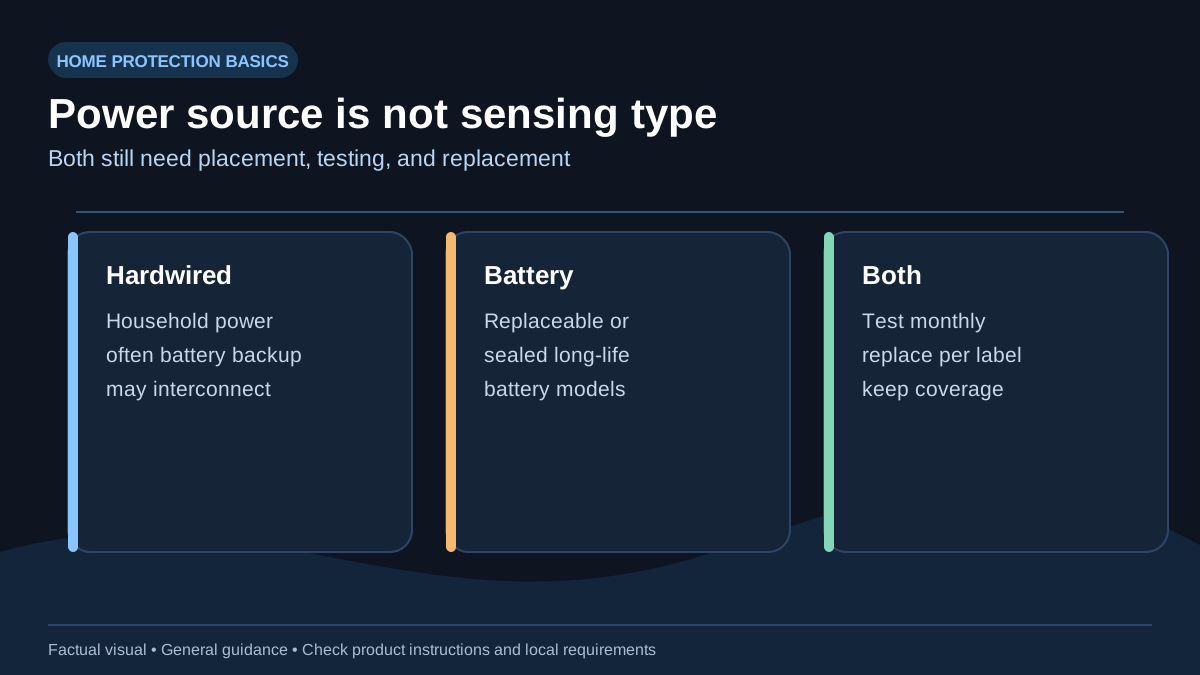
The sensing technology inside a smoke detector — whether ionization, photoelectric, or combination — is separate from how the unit is powered. Both hardwired and battery detectors can use any of those sensing types. The power source affects reliability and installation, not detection method.
- Hardwired detectors: Connected directly to household electrical wiring, typically on a dedicated circuit. Almost always include a battery backup that activates if power is lost.
- Battery-only detectors: Run entirely on disposable or sealed lithium batteries with no connection to household wiring. Can be installed anywhere without an electrician.
Example: Two detectors mounted side by side in the same hallway may use identical photoelectric sensors but one draws power from the electrical panel while the other runs on a 9-volt battery. Their detection behavior is the same. Their maintenance requirements and failure modes are not.
2. Reliability and Power Continuity
The most meaningful practical difference between the two types is what happens when something goes wrong with the power supply.
- Hardwired with battery backup: Continues operating during a power outage because the backup battery takes over automatically. This is the most reliable configuration for continuous protection.
- Battery-only: Entirely dependent on the battery remaining charged. A dead or missing battery means no protection at all, with no fallback.
- Hardwired without backup: Rare in modern installations but worth knowing — a hardwired unit without a battery backup goes offline completely during a power outage.
Example: A power outage during a kitchen fire would silence a battery-less hardwired detector at exactly the wrong moment. A hardwired unit with battery backup switches over seamlessly and continues alarming.
3. Interconnection
One significant advantage of hardwired systems is that the detectors can be interconnected through the wiring. When one detector triggers, all detectors in the system sound simultaneously. This matters most in larger homes where a detector in the basement may not be audible in an upstairs bedroom with the door closed.
- Hardwired interconnection: Reliable and automatic in systems designed to interconnect. When one unit triggers, the other connected alarms sound as well.
- Wireless interconnection: Some battery-operated detectors can interconnect using radio frequency signals. This works well but requires compatible units from the same product line and adds cost.
- No interconnection: Standard battery detectors with no wireless capability operate independently. An alarm in one room does not trigger units elsewhere.
Example: In a two-story home, a fire starting in the basement at night triggers the basement detector. In a hardwired interconnected system, every detector in the house sounds immediately. In a non-interconnected battery setup, only the basement unit alarms — which may not be audible in upstairs bedrooms with doors closed. See Interconnected Alarm Benefits for a fuller breakdown of why this matters.
4. Installation Requirements
Installation is where the two types differ most in terms of practical effort and cost.
- Hardwired: Requires access to household wiring, which typically means an electrician for new installations. Retrofitting a home that was not originally wired for hardwired detectors is a significant project.
- Battery-only: Mounts with two screws and requires no electrical work. Can be installed anywhere in minutes without any special tools or skills.
- Replacing existing hardwired units: Often straightforward if the new detector matches the existing wiring harness or includes a compatible adapter, but connector compatibility varies by brand and model.
Example: A homeowner adding smoke detectors to a finished basement has two realistic options: run new wiring to connect to the existing hardwired system, which requires opening walls, or install battery-operated units that can be mounted directly to the ceiling with no wiring involved.
5. Maintenance Differences
Both types require regular attention, but the nature of that maintenance differs in ways that affect long-term reliability.
- Hardwired backup battery: The backup battery still needs to be replaced periodically, typically every one to two years depending on the model. Neglecting it means the unit has no fallback during a power outage.
- Battery-only standard: Requires annual battery replacement or replacement when the low battery chirp begins. Skipping this leaves the home unprotected with no warning other than the chirp itself.
- Sealed 10-year battery models: Available in both configurations. Eliminate annual battery changes but require full unit replacement when the battery expires. See How Long Smoke Detectors Last for replacement timing on all detector types.
Example: A hardwired detector whose backup battery has not been replaced in five years offers no better power continuity during an outage than a hardwired detector with no backup at all. The backup battery is not optional maintenance — it is part of what makes the hardwired configuration reliable.
6. Which Type Is Right for Different Situations
Neither type is universally better. The right choice depends on the home, the installation context, and what already exists.
- New construction or full renovation: Hardwired interconnected detectors are the standard and are required by most building codes. This is the right time to wire them in properly.
- Existing home already wired for hardwired detectors: Stick with hardwired replacements. The infrastructure is already there and the interconnection benefit is worth maintaining.
- Rental, apartment, or finished space without existing wiring: Battery-operated detectors are the practical choice. Wireless interconnected models are worth the extra cost if the space has multiple rooms.
- Adding coverage to a home with hardwired detectors: A battery-operated unit in a location that is difficult to wire is a reasonable compromise, especially if wireless interconnection is available.
Most homes built after the mid-1990s already have hardwired detectors installed. If yours does, the decision is usually not hardwired versus battery — it is whether to maintain the existing hardwired system properly or supplement it in areas the wiring does not reach.
Related: Photoelectric vs Ionization Alarms | Interconnected Alarm Benefits | What Causes Smoke Detectors to Chirp or Beep