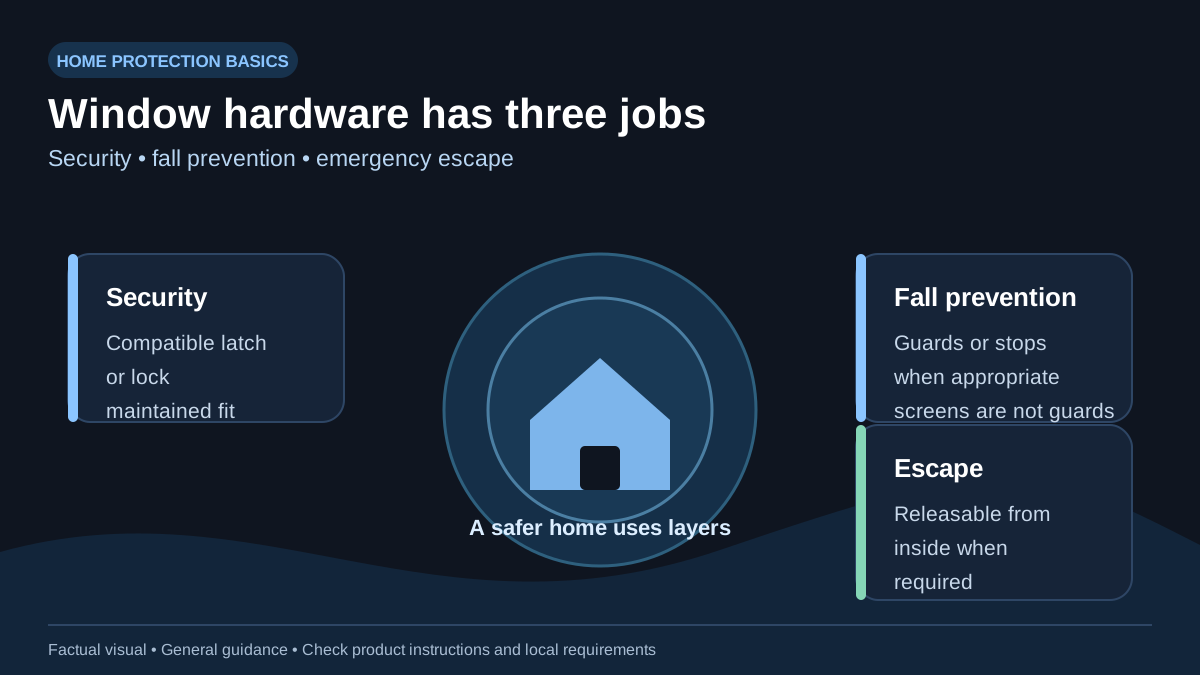
Window Lock Types Explained: Which Locks Actually Secure Your Windows
Most burglars do not smash glass first. They try the quiet route: sliding, lifting, or prying a window that is poorly locked. The factory latch that came on your windows was designed more for convenience than security. If you want to actually harden your home, you need to understand the main lock types and where each one makes sense.
This guide focuses specifically on window locks. For a broader view of how locks fit into doors, frames, and overall entry security, see the Best Door and Window Locks overview and the door frame reinforcement guide.
1. Know Your Window Type First
The right lock depends on how the window moves. Before buying anything, identify which types you have:
- Single-hung / double-hung: Sashes slide up and down in tracks.
- Horizontal sliders: Panels slide side-to-side along a bottom track.
- Casement: Hinged on the side, crank open like a door.
- Awning / hopper: Hinged at the top or bottom, tilt open.
- Basement / egress windows: Often small sliders or tilt-style hardware.
Once you know the motion, you can match hardware that blocks that specific movement. The goal is simple: stop the sash from sliding or the panel from swinging, even if someone pries or pushes hard.
2. Factory Latches: What They Actually Do
Almost every window comes with a basic latch installed at the meeting rail or stile. These are better than nothing, but they are not high-security devices.
Typical Features
- Usually a small cam or lever that pulls the two sashes together.
- Designed mainly to keep the window closed and improve weather sealing.
- Often made of lightweight metal or plastic.
- Rarely keyed and usually easy to operate from inside without thinking.
The problem is that many factory latches can be defeated with prying or by lifting the sash if there is enough play in the frame. If you rely only on these, you are trusting the cheapest hardware on the window to stop a determined intruder.
As with alarm systems in general, weak hardware becomes a failure point. For more on how small weaknesses create larger gaps, see Security System Failure Points.
3. Sash Locks and Upgraded Cam Locks (Hung Windows)
Sash locks are the upgraded version of a basic latch on single- and double-hung windows. They use a stronger cam or hook mechanism to physically pull the sashes together and resist prying.
Where They Work Best
- Ground-level bedrooms with double-hung windows.
- Windows that face alleys, driveways, or low-visibility areas.
- Any opening where the original latch feels loose or flimsy.
What To Look For
- Solid metal construction (not thin pot metal or plastic).
- Mounting screws that bite into the sash, not just the surface.
- Lock body that pulls the sashes tightly together with little play.
- Optionally, a keyed version for extra deterrence on high-risk windows.
Upgrading to a quality sash lock is similar to upgrading a door deadbolt: you are replacing “builder grade” hardware with something that is harder to work around. Paired with zone-based security planning, these upgrades should go first on the windows that are most likely to be targeted.
4. Pin Locks: Simple, Strong, and Cheap
Pin locks use a removable metal pin that passes through one sash and into the frame or the other sash. Once the pin is in place, the window cannot be slid open until the pin is removed from the inside.
Advantages
- Very hard to defeat from the outside without making noise.
- Prevents lifting the sash out of the track.
- Works well as a “ventilation stop” if you drill a second hole for a partially open position.
- Inexpensive and quick to install with basic tools.
Best Uses
- Double-hung windows on the first floor.
- Windows in children’s rooms where you want a limited opening for airflow.
- Basement or side-yard windows that need stronger resistance to prying.
If you use pin locks for partial opening, make sure you are not creating a simple reach-in point near a lock on a nearby door. That’s why it’s important to think about overall entry layout, not just one window. The burglary deterrence basics guide explains how intruders look at your home as a whole.
5. Keyed Window Locks
Keyed locks add an extra layer of control. The sash or slider can only be moved when the cylinder is unlocked from the inside. These are common on sliders but also available for hung and casement windows.
Pros
- Extra deterrence for windows near doors, decks, or flat roofs.
- Prevents someone from opening the window through broken glass and simply flipping a latch.
- Useful in rentals where you want to limit how far certain windows can open.
Cons and Tradeoffs
- You must manage keys so they are accessible in an emergency but not left in the lock.
- Can slow down escape during a fire if you are not consistent about where keys are stored.
- Overkill for second-story windows that are not reachable from a deck or roof.
If you use keyed locks, treat them as part of your overall fire safety plan. Everyone in the home should know where the keys are kept and how to unlock windows quickly at night under stress.
6. Slider Locks and Track Stops
Horizontal sliders and some basement windows ride in a track instead of moving up and down. Their factory latches are often weak, and the panel can sometimes be lifted to bypass the latch entirely. Track-based locks and stops solve that.
Common Options
- Track clamps: Clamp onto the track to block the panel from sliding.
- Thumb-screw stops: Tighten against the track to set a hard stop or ventilation gap.
- Auxiliary slider locks: Bolt-on hardware that adds a second locking point.
Installation Tips
- Install stops on the inside track so they cannot be reached from outside.
- Use at least one device that still lets the window fully open for egress where required.
- Combine with an alarm contact from your security system so you get alerts if the slider is forced.
7. Casement and Awning Window Locks
Casement and awning windows usually lock by pulling the sash tight to the frame when you turn the crank handle. Many also include a separate latch or lever that secures the hardware in place.
Improving Security on These Styles
- Check that the locking points engage solidly at the top and bottom of the sash.
- Upgrade to multi-point locking hardware if the manufacturer offers it.
- Replace loose or worn handles that no longer pull the sash tight.
- Add an alarm contact or glassbreak sensor, especially on ground-level casements.
Because these windows hinge outward, the glass is often the weakest point. Pair strong locks with thoughtful camera placement so anyone working on a casement has to do it in view, not in a blind corner.
8. Prioritizing Which Windows to Upgrade First
You do not have to upgrade every lock in the house at once. Start where the risk and opportunity are highest:
- Ground-level windows that are hidden from the street or neighbors.
- Windows near doors, where an intruder could reach in and unlock the door.
- Basement and side-yard windows behind fencing, hedges, or sheds.
- Any window with a loose, wobbly, or obviously cheap factory latch.
Walk the outside of your home the way a burglar would and map your highest-risk windows. Then match each one with the right type of lock: upgraded sash locks, pin locks, keyed hardware, or track stops. Use good false-alarm practices so your system is trusted when it does alert.
9. How Window Locks Fit Into Your Overall Security Plan
Window locks are one piece of a larger system, not a stand-alone solution. They work best when combined with:
- Solid door hardware and frame reinforcement.
- Thoughtful alarm zoning and sensor placement.
- Exterior lighting and simple visibility improvements.
- Common-sense routines like actually locking windows before leaving or going to bed.
If you tackle windows at the same time you harden doors and plan your alarm layout, you end up with a balanced system: an intruder has to beat multiple layers, not just one flimsy latch. That is the entire point of home security—several reasonable obstacles stacked together instead of one magic device.