Power Outage Readiness Checklist
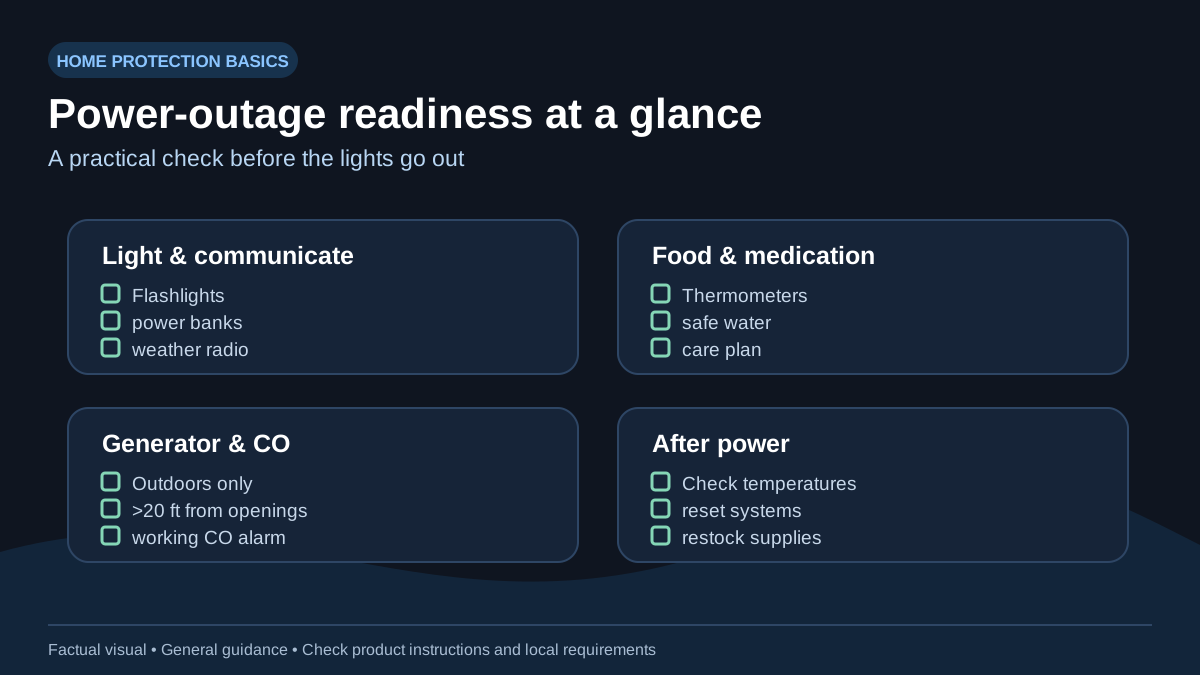
Use this as a preparation list, then adapt it for household members, medical devices, pets, local hazards, and the likely duration of an outage.
Lighting, communications, and information
- [ ] Flashlights, headlamps, battery lanterns, and batteries are in known locations.
- [ ] Power banks and car chargers are charged; a battery or hand-crank weather radio is available.
- [ ] Emergency contacts, utility information, and local shelter information are available without relying only on a phone.
Food, water, and medication
- [ ] Refrigerator and freezer thermometers are available; doors stay closed during an outage.
- [ ] You know the food-safety limits: about 4 hours for an unopened refrigerator, 48 hours for a full freezer, and 24 hours for a half-full freezer.
- [ ] Safe water and shelf-stable food are available for the household’s needs.
- [ ] A clinician, pharmacy, device supplier, or utility plan covers refrigerated medication and electricity-dependent medical equipment.
Generator and CO safety
- [ ] If used, the generator will run outdoors more than 20 feet from windows, doors, and vents—not in a garage, carport, basement, or home.
- [ ] Battery-powered or battery-backup CO alarms are working.
- [ ] No grill, camp stove, charcoal device, or gas oven/range will be used indoors for heat or cooking.
- [ ] No portable generator will be connected to home wiring without properly installed equipment from a qualified electrician.
Home and household safety
- [ ] Smoke and CO alarms are tested according to their instructions.
- [ ] Household members know the evacuation plan and where to meet outside.
- [ ] Plans account for extreme heat/cold, mobility limitations, pets, and transportation.
- [ ] Local alerts, utility guidance, and water advisories will control during the event.
After power returns
- [ ] Check refrigerator/freezer temperatures and discard unsafe food; do not taste food to decide.
- [ ] Check medical-device, alarm, and security-system status according to their instructions.
- [ ] Recharge, refill, and record what was missing for the next event.
Sources and review notes
This page was reviewed against the primary public-safety sources below on September 19, 2026. They provide general safety guidance; the alarm label, local fire authority, building code, lease, and licensed professional remain controlling where they differ.