DIY vs Professional Security Systems: What Actually Matters
Most homeowners compare DIY and professional security systems by looking at brand names, subscription prices, or which one has the flashiest app. None of that tells you how well the system will detect a break-in or how likely it is to get you help when it matters. The real difference is in installation quality, how monitoring works, and how much effort you are willing to put into maintaining the system over time.
1. The Real Divider: Installation Quality
The biggest security failures come from bad installs, not from choosing DIY or professional. A motion sensor pointed in the wrong direction or a door contact mounted with too much gap will fail the same way no matter who sold it to you.
Common DIY Mistakes
- Door and window contacts mounted too far apart or misaligned.
- Motion sensors aimed at windows, vents, or ceiling fans instead of actual entry paths.
- Cameras placed too high, too low, or off to the side so you see faces only after someone is already past the door.
- Not testing every sensor after installation and after battery changes.
These mistakes are easy to make if you are in a hurry, guessing at placement, or treating the system like a gadget instead of safety equipment.
Professional Install Does Not Guarantee Perfection
A professional installer brings experience, but they are still on a schedule. If a technician is rushed or trying to keep the job cheap, you can end up with:
- Minimal coverage instead of coverage that matches your home’s layout.
- One motion sensor trying to cover too many rooms at once.
- Missed basement, garage, or side-entry doors because they were “extra.”
In other words, the person doing the install matters more than whether they are DIY or pro. A careful homeowner following clear placement rules can easily outperform a rushed technician.
Key point: If you choose DIY, your job is to slow down and treat the install like a safety project, not a weekend gadget setup.
2. Monitoring: Who Responds When the Alarm Trips
Monitoring is where DIY and professional systems usually separate. It is not about who sends the notification; it is about what happens if you cannot respond.
Self-Monitored DIY Systems
Most DIY systems rely on push notifications, text messages, and emails. The system sends a signal to your phone, and everything stops there unless you act. This can work well if:
- You keep your phone on and nearby most of the time.
- You are comfortable deciding when to call police or neighbors.
- You do not travel often or spend long stretches without cell coverage.
The weakness is obvious: if your phone is dead, on silent, or out of service, the alarm is effectively shouting into a void. The siren may scare someone off, but there is no guaranteed follow-up.
Professionally Monitored Systems
Professionally monitored systems send alarm events to a central station. Operators then try to reach you and, if needed, contact emergency services on your behalf. This adds:
- Redundant paths for alerts to leave your house, often with cellular and battery backup.
- A human layer that can keep calling until someone answers.
- Automatic escalation if suspicious activity is confirmed or no one can be reached.
This does not make false alarms impossible, but it does mean that a break-in can trigger a response even if you are asleep, at work, or away from your phone.
Hybrid Approaches
Many modern systems blur the line between DIY and professional by letting you switch between self-monitoring and paid monitoring. You might:
- Run self-monitoring most of the year.
- Turn on professional monitoring during vacations or busy seasons.
- Use app alerts first and central station dispatch as a backup.
Flexibility matters more than labels. If a system lets you step up monitoring when your schedule changes, it will fit real life better than a rigid, one-mode-only setup.
3. Cost: Upfront vs Long-Term
DIY systems are clearly cheaper upfront. That is part of their appeal. But homeowners often underestimate what they will spend over the life of the system.
Typical DIY Cost Pattern
- Low starter kit price with a hub and a handful of sensors.
- Additional sensors, cameras, and accessories added over time.
- Out-of-pocket cost for every replacement or upgrade.
- Optional low-cost or no-cost monitoring if you stay self-managed.
If you are comfortable handling your own maintenance and you do not need professional monitoring, DIY can stay inexpensive while still giving you solid coverage.
Typical Professional Cost Pattern
- Higher upfront cost that may be rolled into a contract.
- Monthly monitoring fees that cover the central station and sometimes service calls.
- Technicians available to troubleshoot, replace, or reprogram equipment when needed.
- Occasional upgrade fees if you change panels, add zones, or expand coverage.
On paper, professional systems cost more. In practice, if you would pay someone to fix anything that breaks or gets misconfigured, the difference narrows over time.
4. Equipment Differences: Less Important Than They Look
Both DIY and professional systems rely on the same core components: door and window contacts, motion sensors, glassbreak detectors, sirens, keypads, and a central hub or panel. The marketing is different; the physics are not.
Where DIY Equipment Usually Lands
- Primarily wireless sensors powered by batteries.
- Simple peel-and-stick installs for contacts and motion detectors.
- Tight integration with phone apps and smart home platforms.
- Easy self-enrollment of new devices through QR codes or menu prompts.
For apartments, townhomes, and smaller single-family homes, this is usually more than enough. Wireless sensors that are installed correctly and tested regularly can provide very reliable coverage.
Where Professional Equipment Stands Out
- Options for fully wired or hybrid wired/wireless systems.
- Higher-end motion sensors and contacts designed for long service life.
- Panels that use dedicated, encrypted communication paths instead of shared Wi-Fi.
- More robust options for large properties, outbuildings, and complex layouts.
These advantages matter most in bigger homes, homes with thick construction that can block wireless signals, or houses where you want equipment hidden inside walls and trim instead of on the surface.
5. When DIY Makes the Most Sense
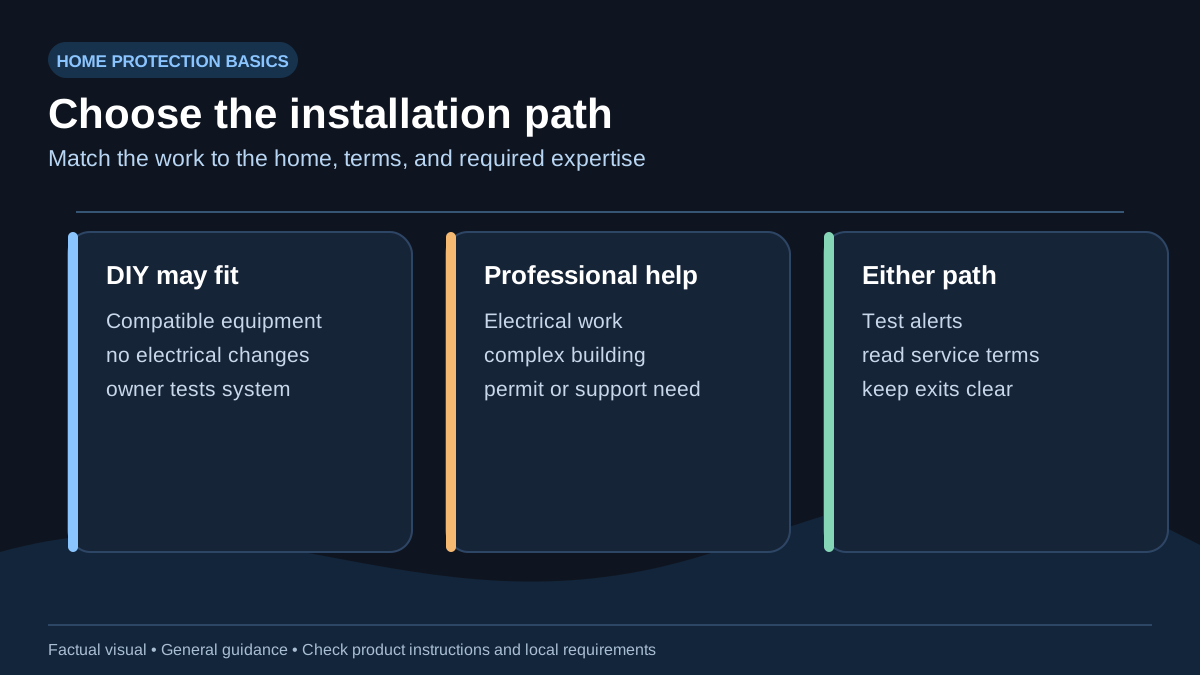
A DIY system is often the better fit when:
- You rent and cannot run wires or drill extensively into walls and ceilings.
- You live in a small home, condo, or apartment with a simple floor plan.
- You are comfortable using tools, following install guides, and testing devices.
- You want to avoid long-term contracts and keep monthly costs low.
- You do not need guaranteed professional dispatch, only fast alerts to your phone.
In these situations, the flexibility and lower cost of DIY usually outweigh the benefits of a professionally installed system, as long as you take the install and testing seriously.
6. When Professional Install Is Worth It
Professional installation and monitoring are easier to justify when:
- You own a larger or multi-story home with several entry points.
- You want wired sensors for reliability or aesthetics.
- You have detached garages, sheds, or workshops that need coverage.
- You travel frequently or work hours where you regularly miss calls and notifications.
- You store high-value items like tools, firearms, or equipment that would be costly to replace.
- You simply do not want the responsibility of diagnosing and fixing system issues yourself.
In these cases, paying for a professional to design, install, and monitor the system can be a better trade than trying to piece it together on your own and hoping you guessed right.
7. Bottom Line: Choose Based on Effort and Risk, Not Labels
DIY vs professional is not a question of which category is "better." It is a question of how much work you are willing to do yourself and how much risk you are willing to carry if you miss an alert.
- DIY works best for smaller homes, handy owners, and people who reliably respond to phone alerts.
- Professional systems work best for larger homes, frequent travelers, and anyone who wants a backup team watching for alarms.
- In both cases, coverage quality and correct installation matter more than the logo on the box.
If you are willing to plan your sensor layout, follow placement rules, and test the system regularly, a DIY setup can protect your home well. If you would rather pay for design help, dispatch, and long-term service, a professionally installed and monitored system is more likely to fit.